mountainbamboonut wrote:Can someone kindly explain the difference between leaf burn and top kill?
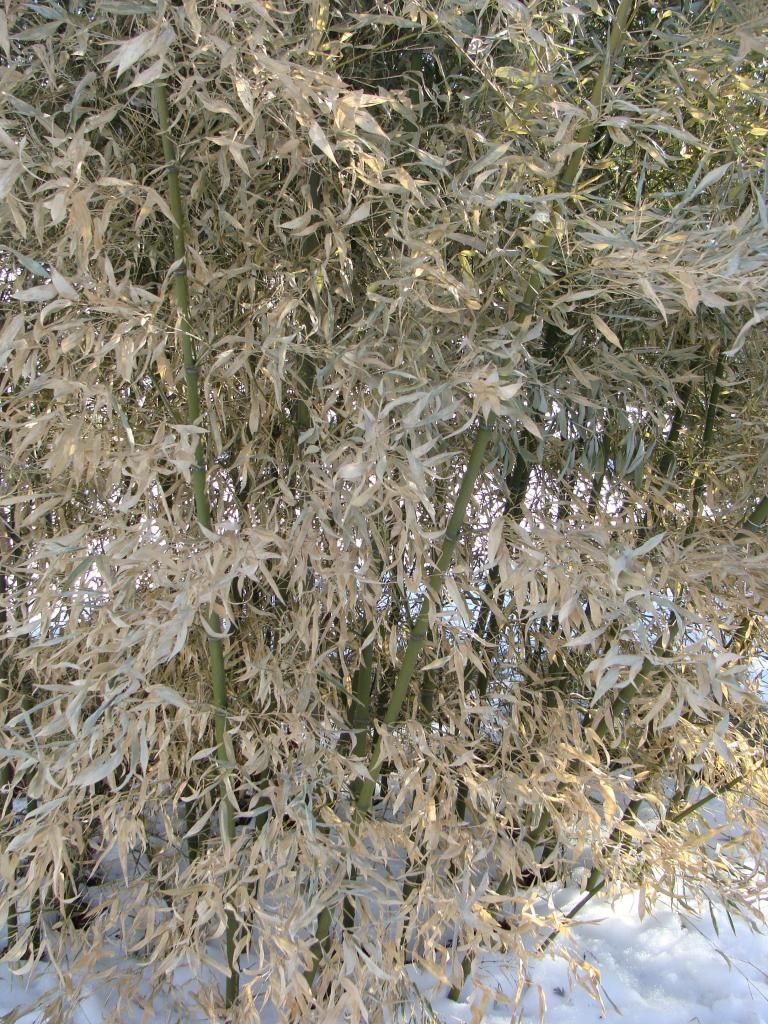
With leaf burn, leaf tips or whole leaves die. In spring, the affected branches may or may not recover with new leaves depending on the severity of winter damage.
With top kill, the affected branches are simply dead. No new leaves are possible.
With 100% top kill, a bamboo completely relies on new shoots for survival.
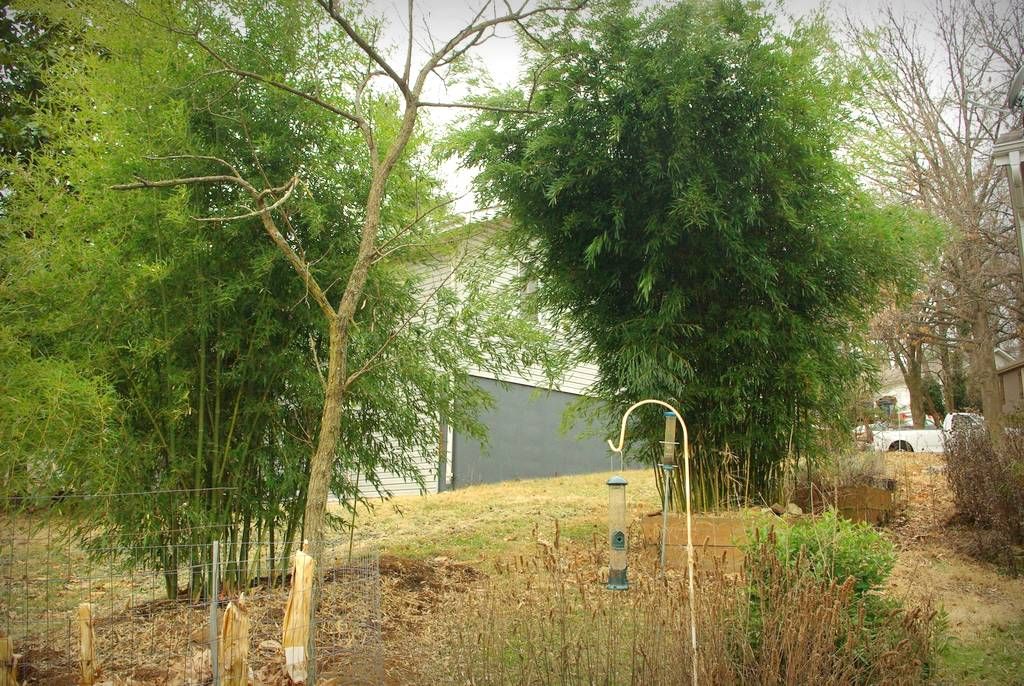
It seems to me that one couldn't know at this point if they had top kill or just leaf burn. In that it is YTD if the branches will produce new buds and leaf out again this spring/summer. This would also be even more difficult on the larger specimens (my vivax, megurochiku, and bambusoides) that I have because I cannot even see the branches/leaves with any amount of detail given their height.
For example one of my two megurochiku (the only bamboo I have that showed any stress at all from winter) plantings had leaf burn of about 15% but it appears that now all of the leaves are dying/falling off of one particular culm. How can I accurately call this top kill and not simply a dead culm that is expiring naturally?
If you look at my place right now you'll see 2 acres of blond leaves (100% leafburn) and lots of still green culms, but I will call this 100% topkill because I am relatively certain that leaf buds are fried, and soon culms will start to tan from tip to ground. Easy to call this one except for a stray culm of 2 that must have been buried in snow. So no leaf drop yet, just blond leaves, green culms (some tan culms as well to be sure) and I am already cutting down most of the culms as I get to it, I'm leaving a few standing in any patch that I wish to see maybe get a boost and I am clear cutting species that I'm over...
For example one of my two megurochiku (the only bamboo I have that showed any stress at all from winter) plantings had leaf burn of about 15% but it appears that now all of the leaves are dying/falling off of one particular culm. How can I accurately call this top kill and not simply a dead culm that is expiring naturally?
I think it is natural expiration. Or a vole or gopher ate the rhizome feeding it. Though there are several clones of black stripe out there, and mine is the stingy with stripes type, I have megurochiku here and it is planted unprotected and exposed on my property. It took 7 degrees F. and did not even flinch. Not a single leaf lost. Near it are some aurea/Golden planted in a stand and they got quite a lot of leaf burn at the tops of the culms (15 feet up). My standard nigras took a big hit here, even planted in more protected areas. Some were culm/top killed and completely leaf burned, but only on specific culms. Even on the most hard hit nigras, there are 2 or 3 live culms with leaves on them. They seem to have decided to abandon certain culms this winter.
johnw wrote:If it is of any interest I could enter all the hardiness findings in a spreadsheet by owner and genus/species. Let me know. We will need to set up a special thread - "2014 cold hardiness assessments".
For those that have already reported in and your results change when the weather warms up PM me and I will update your input(s). Meanwhile I will only use input posted in this Cold damage winter 2013/2014 or Pm'ed to me.
Any interest?
Sounds good to me. Some real hardiness figures would be interesting, given the variation in published and advertised numbers.
Just as several of my bamboos starting shooting, we got a cold snap and snow last night. Hopefully it didn't abort the little guys sticking an inch or two out of the ground but I'm guessing they will.
dp - I've plugged all the comments in to a spreadsheet. Sometime in April I will finish it off once the reports cease.
Need to know from most of those that reported on their damage:
Ground frozen or not during the coldest period.
Ground frozen for how many weeks.
Wind during cold period and balance of winter?
Duration of below freezing temps in days or weeks or months - absolute low and duration / below 0f / 0-+10F / +10F-+20F / 20-32F / above freezing. Rough estimates.
Normal zone in your area.
Humidity during cold period. Precip normal or above or deficit.
Here are those that I need that info from:
dependable - Z?
STEVE LAU, ROCHESTER, NY - Z?
BRAD, INDIANA - Z?
jd ILLINOIS - Z?
moriphen, 7b WHERE? - Z?
yard e in Michigan - Z?
Leo S. - Z?
Here the ground was frozen for a full 13 weeks, still is, and when it reached -5.4F on my weather station, I'm guessing the wind was around 10-20mph, but it got below 0F for a total of 13 times which while the most I've ever seen prior to this was 3-4 times in any given winter. I'm guessing the humidity was high because the snow never melted away all the way through winter. We just got another foot of snow last night so it's here to stick well into April.
Most winters, the winter lows will be 5F to -5F so zone 6b-7a, sometimes 6a lows. The absolute lowest temperature in history was -22F, or zone 4b, but that would take some major extremes.
Aside from the damage, I think the regrowth is more important to look at for any given species.
Is snow an automatic boo shoot (less than 4'' out of the ground) killer or can they survive? I have 4 plantings shooting right now after extended weather in the 70's and now snowfall.
I'm sure there are a lot of variables but was wondering if two or three days off wet snow will do them in.
Phew, that is a relief. Glad to hear that they might have a chance anyway at survival.
Just went out and shook the snow off of my megurochikus, vivax, and golden bamboo which were all laid down in the snow. They must be really confused by extended high 70's weather and nitrogen applications and then heavy snowfall. Next week back to the high 70's again.
Alan, it looks like your damage is right on par with the damage I received, but your temperatures got just a bit lower. In any case, most bamboos generally have fried leaves, but green culms.
Here's parvifolia. It looks like the remaining green leaves appear to be slowly dieing off however this winter just wasn't cold enough to produce much top kill. In this case if the culms survive over a dozen nights of subzeros, they may be hardy enough to handle zone 5 without dieing to the ground.
I'm glad I never pruned out any of the culms since there are lots of starches in them that can go to good use this spring.